Sound Exposure Meters
Overview of Sound Exposure Meters for Agricultural Environmental Monitoring
Reliable acoustic measurement plays a significant role in environmental monitoring programs that support modern agricultural operations. Sound exposure meters provide accurate measurement of cumulative noise levels across defined time intervals, allowing engineers, researchers, and regulatory professionals to quantify environmental sound pressure levels generated by machinery, livestock facilities, irrigation equipment, and agricultural processing systems.
Acoustic exposure measurement technology captures sound energy over time and converts it into standardized metrics used for regulatory reporting, environmental impact studies, and occupational safety analysis. These instruments help professionals monitor continuous and intermittent sound levels in field environments, supporting data-driven decision making across agricultural facilities, experimental test sites, and rural infrastructure projects.
Sound exposure meters are designed for precision, durability, and field deployment. Advanced digital signal processing, high dynamic range microphones, and integrated data logging allow accurate acoustic monitoring under variable outdoor conditions. Environmental engineers and agricultural scientists rely on these instruments to analyze noise exposure trends, evaluate equipment impact, and maintain compliance with regional environmental noise regulations.
Technical Definition of Sound Exposure Meters for Environmental Measurement
Sound exposure meters measure the total acoustic energy accumulated during a specified measurement period. The device integrates sound pressure levels over time and calculates exposure metrics such as Sound Exposure Level (SEL), equivalent continuous sound level (Leq), and cumulative noise dose.
Acoustic exposure measurement differs from simple sound level monitoring because the system integrates fluctuating sound pressure levels to quantify the total noise impact over a defined duration. This method enables accurate evaluation of environmental noise generated by agricultural machinery, grain processing systems, irrigation pumps, and livestock ventilation equipment.
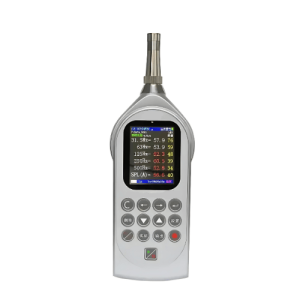
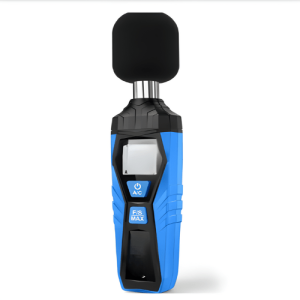
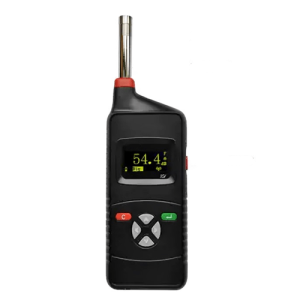
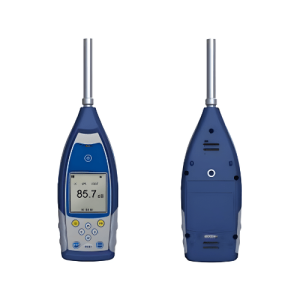
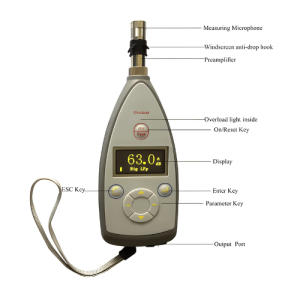
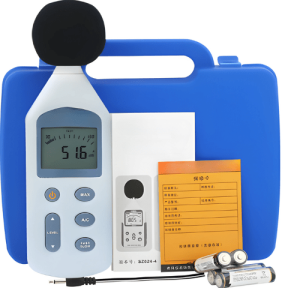
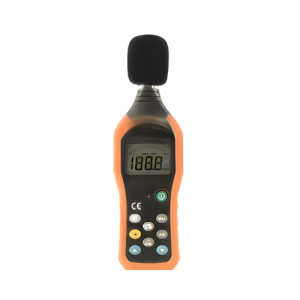
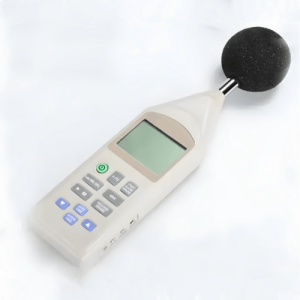
Environmental sound exposure meters typically consist of a precision microphone, signal conditioning circuitry, digital processing hardware, and data logging capabilities. High sensitivity condenser microphones capture acoustic pressure variations across a broad frequency range. Signal processing units convert the acoustic waveform into standardized measurements used in environmental assessments.
Field measurement systems must maintain accuracy under temperature fluctuations, humidity variations, and wind conditions commonly encountered in agricultural environments. Professional-grade sound exposure meters incorporate wind screens, environmental protection housings, and automated calibration verification routines to maintain measurement integrity.
Measurement parameters supported by acoustic exposure meters often include:
- Sound Exposure Level (SEL) for cumulative acoustic energy measurement
- Equivalent Continuous Sound Level (Leq) for time-weighted sound averages
- Maximum Sound Level (Lmax) during measurement intervals
- Peak Sound Pressure Level detection for transient acoustic events
- Time-weighted noise dose measurements for occupational safety analysis
Environmental noise studies within agricultural landscapes frequently involve long-duration monitoring campaigns. Sound exposure meters designed for such studies include large internal memory capacity, extended battery life, and automated logging schedules to capture sound exposure data across multiple days or weeks.
These instruments support environmental scientists and regulatory consultants conducting impact assessments near farms, grain storage facilities, food processing plants, and irrigation pumping stations.
Agro Enviro Tests Sound Exposure Meter Capabilities and Configuration Options
Acoustic monitoring systems used in agricultural research environments must deliver both measurement precision and field durability. Agro Enviro Tests provides sound exposure meters engineered to support environmental noise measurement programs across farms, research stations, and agricultural processing facilities.
Sound exposure monitoring solutions offered through Agro Enviro Tests emphasize reliability in outdoor environments where fluctuating weather conditions and operational noise sources require robust instrumentation.
Advanced functionality available within modern sound exposure meters includes:
Precision Acoustic Measurement Sensors
High accuracy condenser microphones capable of detecting sound pressure variations across a wide frequency spectrum.
Microphone assemblies typically include:
- Pre-polarized measurement microphones
- Wind noise reduction screens
- Protective environmental housings
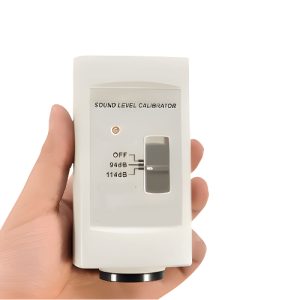
- Calibration adapters for verification procedures
Microphone sensitivity and dynamic range determine the instrument’s ability to detect both low-level environmental noise and high-intensity agricultural machinery sound events.
Integrated Data Logging and Environmental Recording
Acoustic exposure monitoring systems incorporate internal memory to store extended measurement sessions.
Common logging features include:
- Continuous acoustic exposure recording
- Programmable sampling intervals
- Event-triggered sound capture
- Timestamped measurement records
- Large onboard storage capacity
Environmental monitoring teams frequently deploy meters in unattended measurement scenarios where automated logging ensures consistent data capture.
Digital Signal Processing and Measurement Algorithms
Advanced digital signal processing enables accurate computation of exposure metrics required for environmental studies.
Signal processing capabilities may include:
- A-weighting and C-weighting acoustic filters
- Real-time sound exposure integration
- Statistical noise analysis
- Frequency band analysis
- Time history acoustic recording
These processing capabilities allow engineers to analyze noise patterns associated with agricultural operations and equipment.
Wireless Data Transfer and Remote Monitoring
Many modern acoustic exposure meters support digital connectivity for data retrieval and monitoring.
Typical communication options include:
- USB data export interfaces
- Wireless data synchronization
- Remote monitoring platforms
- Cloud-based data storage integration
- Field data transfer via mobile devices
Remote data access simplifies long-term monitoring projects conducted across large agricultural landscapes.
Environmental Durability for Outdoor Monitoring
Sound exposure meters deployed in agricultural environments require rugged construction capable of withstanding environmental stressors.
Typical environmental design features include:
- Weather-resistant enclosures
- Temperature-stable electronics
- Dust and moisture protection
- Long-life battery systems
- Tripod or pole mounting options
These design elements allow accurate acoustic monitoring in fields, orchards, irrigation systems, and livestock operations.
Continuous product research and development efforts have allowed Agro Enviro Tests to expand acoustic monitoring technologies tailored for environmental measurement needs. A rigorous quality assurance process and technical guidance ensure instruments operate reliably across demanding agricultural environments.
Industrial and Environmental Applications of Sound Exposure Meters
Sound exposure measurement supports a wide range of environmental monitoring, regulatory assessment, and operational analysis scenarios within agricultural systems.
Common applications include:
- Monitoring cumulative noise exposure generated by irrigation pumps and mechanical farm equipment operating continuously during seasonal agricultural production cycles.
- Assessing acoustic impact of grain processing facilities and grain drying systems located near rural residential communities and farmland environments.
- Evaluating environmental sound exposure from livestock ventilation systems operating within poultry, dairy, and swine production facilities.
- Measuring noise exposure generated by agricultural harvesting machinery during extended harvesting periods across large farm operations.
- Supporting environmental impact studies for agricultural infrastructure development projects such as storage facilities and processing plants.
- Documenting cumulative acoustic energy produced by irrigation infrastructure installed across extensive crop irrigation networks.
- Conducting rural environmental sound surveys near farms to evaluate long-term sound exposure levels affecting nearby communities.
- Assessing acoustic emissions from renewable energy installations such as agricultural wind turbines and pumping stations.
- Supporting occupational safety programs that measure noise exposure levels experienced by farm equipment operators.
- Evaluating sound exposure patterns during agricultural research trials conducted at experimental crop and livestock research facilities.
- Monitoring noise levels generated by agricultural transportation logistics including grain loading equipment and truck operations.
- Collecting environmental acoustic data for environmental compliance reporting required during agricultural infrastructure expansion.
- Studying acoustic conditions surrounding livestock feeding systems and automated feed processing equipment.
- Measuring sound exposure patterns associated with irrigation pump stations operating near water management infrastructure.
Environmental noise monitoring data generated by these applications supports environmental engineering analysis, regulatory reporting, and agricultural planning.
USA and Canada Standards Applicable to Sound Exposure Meter Measurements
Sound exposure meters used in environmental and occupational noise measurement must comply with recognized acoustic measurement standards and regulatory frameworks.
Relevant standards and certifications include:
- ANSI S1.4 Sound Level Meter Standard
- ANSI S1.43 Standard for Integrating Sound Level Meters
- ANSI S1.11 Specification for Octave-Band and Fractional-Octave Filters
- IEC 61672 Electroacoustics Sound Level Meter Standard
- IEC 61260 Electroacoustics Filter Specifications
- OSHA Occupational Noise Exposure Standard 29 CFR 1910.95
- NIOSH Criteria for a Recommended Standard Occupational Noise Exposure
- EPA Environmental Noise Guidelines
- CSA Z107.56 Procedures for Measurement of Occupational Noise Exposure
- Environment Canada Environmental Noise Measurement Guidelines
Compliance with these standards ensures that acoustic exposure measurements remain valid for regulatory reporting and environmental impact assessments.
Engineering Advantages of Agro Enviro Tests Sound Exposure Meters
Organizations implementing acoustic monitoring programs require instruments capable of delivering consistent and traceable measurements across demanding field environments. Agro Enviro Tests sound exposure meters provide engineering benefits that support environmental measurement reliability.
Key technical advantages include:
High Measurement Accuracy
Precision microphones and stable signal processing electronics provide reliable acoustic exposure measurements across wide sound pressure ranges.
Calibration verification systems allow engineers to validate measurement accuracy before and after field monitoring sessions.
Long Duration Monitoring Capability
Extended battery life and high-capacity data storage allow long-term environmental monitoring projects to operate without frequent maintenance.
Continuous monitoring supports environmental studies conducted over seasonal agricultural cycles.
Robust Environmental Construction
Field-deployable acoustic monitoring instruments incorporate protective housings and environmental sealing.
This construction enables reliable operation within:
- Crop production fields
- Irrigation infrastructure locations
- Livestock housing facilities
- Agricultural research sites
Comprehensive Acoustic Analysis Features
Integrated digital signal processing allows measurement of multiple acoustic parameters within a single instrument.
Engineers can analyze cumulative exposure levels, peak sound events, and time-weighted noise patterns.
Integration with Environmental Monitoring Systems
Acoustic exposure monitoring equipment may operate alongside other environmental monitoring technologies including weather sensors, atmospheric analyzers, and field instrumentation networks.
This integration enables comprehensive environmental data collection supporting agricultural sustainability research.
Agro Enviro Tests has rapidly established a reputation as a trusted provider of advanced environmental measurement technologies supporting agricultural industries. Strong presence across North America reflects a commitment to reliable instrumentation, rigorous product validation, and dedicated technical support for engineers and system integrators implementing environmental monitoring programs.
Connect With Agro Enviro Tests
Organizations planning environmental acoustic monitoring projects often require guidance selecting appropriate instrumentation, deployment configurations, and measurement methodologies. Acoustic exposure measurement programs can vary significantly depending on farm infrastructure, equipment types, and regulatory requirements.
Technical specialists at Agro Enviro Tests assist engineers, agricultural researchers, environmental consultants, and system integrators in identifying suitable sound exposure meter configurations for their specific monitoring needs.
Additional information about acoustic monitoring instruments, product specifications, system integration options, and technical consultation services can be obtained by contacting the Agro Enviro Tests team through the official contact page. Visitors seeking product recommendations or environmental monitoring guidance are encouraged to reach out through the Contact Us page where technical experts can provide tailored assistance for environmental sound measurement projects.
Showing 1–12 of 456 results
-
Product successfully added to the Quote List
-
Product successfully added to the Quote List
-
Product successfully added to the Quote List
-
Product successfully added to the Quote List
-
Product successfully added to the Quote List
-
Product successfully added to the Quote List
-
Product successfully added to the Quote List
-
Product successfully added to the Quote List
-
Product successfully added to the Quote List
-
Product successfully added to the Quote List
-
Product successfully added to the Quote List
-
Product successfully added to the Quote List