Solar Radiation Meters
Overview of Solar Radiation Meters for Agricultural Climate & Field Monitoring
Solar radiation meters measure the intensity of sunlight reaching the Earth’s surface and convert it into precise electrical signals for analysis and monitoring. These instruments play a vital role in agricultural environmental measurement systems where solar energy directly influences crop growth, evapotranspiration, soil temperature, and irrigation strategies. Accurate solar irradiance measurement allows agronomists, researchers, and farm managers to evaluate environmental conditions affecting plant productivity.
Reliable solar radiation monitoring supports precision agriculture programs, crop modeling systems, greenhouse climate control, and environmental data logging networks. Instruments designed for field deployment provide stable measurement performance under varying weather conditions, enabling consistent data acquisition throughout the growing season. Measurement outputs commonly integrate with meteorological stations, agricultural IoT platforms, and environmental monitoring frameworks used in farming operations and agricultural research environments.
Agricultural monitoring programs increasingly rely on high-precision solar irradiance sensors to quantify available solar energy for crop canopy modeling and irrigation demand calculations. Field engineers and agronomists depend on consistent solar radiation measurements to support environmental assessment, agricultural research, and climate-informed farm management strategies.
Solar radiation meters are scientific instruments designed to measure solar energy flux received per unit area over time. These sensors quantify shortwave radiation within the spectral range typically associated with sunlight reaching agricultural fields. Measurement results are reported in watts per square meter and are used to analyze solar energy availability, crop photosynthesis potential, and environmental energy balance.
Several specialized sensor types are used for solar radiation monitoring in agricultural environments:
Pyranometers
Pyranometers measure global solar radiation, including both direct sunlight and diffuse radiation scattered by the atmosphere. Precision thermopile sensors capture energy from a broad spectral band, typically from 300 nm to 2800 nm.
Silicon Photodiode Radiation Sensors
Photodiode-based solar radiation meters use silicon detectors to measure irradiance levels with rapid response times. These sensors are commonly deployed in agricultural weather stations where cost efficiency and reliable daylight measurement are required.
Net Radiometers
Net radiometers measure the balance between incoming and outgoing radiation. Agricultural scientists use these sensors to evaluate surface energy exchange, soil heat flux behavior, and crop evapotranspiration models.
Photosynthetically Active Radiation (PAR) Sensors
PAR sensors measure radiation within the 400 to 700 nm range used by plants for photosynthesis. Agronomists rely on these measurements for crop growth analysis, canopy light distribution studies, and greenhouse optimization.
Agricultural monitoring systems often combine these sensors to build a complete environmental radiation profile for crop research, irrigation planning, and microclimate analysis.
Environmental measurement solutions provided by Agro Enviro Tests focus on delivering reliable solar irradiance data for agricultural operations, research programs, and environmental monitoring networks. Engineers and agricultural technicians require sensors that maintain measurement stability despite temperature fluctuations, humidity exposure, and prolonged outdoor deployment.
Solar radiation meters supplied through Agro Enviro Tests support field engineers, environmental researchers, and agricultural monitoring specialists through a range of technical capabilities.
High Precision Radiometric Measurement
Solar irradiance sensors use calibrated detection elements to ensure accurate measurement across broad solar spectral bands. Laboratory calibration ensures traceable accuracy for agricultural environmental monitoring programs.
Long Term Field Stability
Sensor materials and dome optics are engineered for prolonged outdoor exposure. Weather resistant housings protect sensing elements against dust accumulation, precipitation, and ultraviolet degradation.
Integrated Environmental Monitoring Compatibility
Solar radiation meters integrate with agricultural weather stations, environmental data loggers, and remote monitoring systems. Engineers frequently deploy these instruments as part of larger climate monitoring infrastructures.
Rapid Sensor Response
Fast response detection elements capture fluctuations in solar irradiance throughout the day. Dynamic measurement capability supports crop canopy research and microclimate analysis.
Low Power Consumption
Solar radiation sensors designed for remote agricultural monitoring operate with minimal power demand. Field systems powered by solar panels and battery systems benefit from energy efficient instrumentation.
Flexible Output Interfaces
Common sensor outputs include analog voltage, SDI-12 digital communication, and Modbus protocols. Integration flexibility allows connection with meteorological stations, irrigation control platforms, and agricultural data management systems.
Configurable Mounting Systems
Mounting hardware enables installation on meteorological towers, agricultural monitoring poles, greenhouse structures, and environmental research stations. Proper alignment ensures reliable irradiance measurement accuracy.
Engineering teams working with Agro Enviro Tests can configure solar radiation monitoring systems tailored to specific agricultural environments, including large farms, research stations, orchards, and controlled environment agriculture facilities.
Strong quality control practices, combined with ongoing product development and technical consultation, support reliable performance for organizations deploying environmental measurement systems across North America.
Solar radiation meters support a wide range of agricultural and environmental monitoring tasks where sunlight intensity directly influences biological processes and environmental energy balance.
- Crop evapotranspiration modeling for irrigation scheduling using solar radiation data integrated with temperature, humidity, and wind measurements.
- Precision agriculture research programs analyzing crop growth response to solar energy availability across different soil types and climate conditions.
- Greenhouse climate control systems regulating shading screens, ventilation, and lighting based on real-time solar irradiance measurements.
- Agricultural weather stations collecting solar radiation data to support crop forecasting models and environmental decision support systems.
- Orchard and vineyard monitoring programs studying canopy light interception and photosynthetic radiation distribution for yield optimization.
- Environmental research stations measuring solar radiation variability to study climate trends and agricultural ecosystem responses.
- Renewable agriculture energy studies evaluating solar energy potential for farm infrastructure and solar powered irrigation systems.
- Soil heat flux research using solar radiation measurements to understand surface energy exchange and soil temperature dynamics.
- Government agricultural monitoring networks collecting environmental radiation data for climate observation and regulatory reporting.
- Crop physiology experiments evaluating plant photosynthesis performance under controlled radiation conditions using PAR sensor measurements.
- Controlled environment agriculture facilities optimizing artificial lighting systems by comparing natural sunlight radiation levels.
- Agricultural hydrology research programs calculating water balance parameters using solar energy data combined with meteorological observations.
Solar radiation measurement instruments used in agricultural environmental monitoring may align with several recognized standards and certification frameworks used in North America.
- ISO 9060
- ISO 9847
- WMO No. 8 Guide to Meteorological Instruments and Methods of Observation
- ASTM G173
- ASTM E824
- NIST Traceable Calibration Standards
- Environment and Climate Change Canada Meteorological Instrument Standards
- NOAA Surface Radiation Network Measurement Guidelines
- NRCan Solar Resource Measurement Guidelines
Organizations deploying agricultural environmental monitoring systems often require instruments capable of delivering consistent measurement performance over extended field deployment periods. Agro Enviro Tests emphasizes technical reliability and engineering practicality in solar radiation measurement solutions.
Calibration Traceability for Measurement Accuracy
Solar radiation sensors used in agricultural research and monitoring programs undergo calibration procedures aligned with internationally recognized radiometric standards. Traceable calibration improves data comparability across environmental monitoring networks.
Robust Environmental Protection
Instrument housings and optical components are designed to withstand agricultural field conditions that include rain, dust exposure, temperature variation, and ultraviolet radiation. Durable construction reduces maintenance frequency in remote installations.
Optimized Optical Dome Design
High quality optical domes improve spectral transmission and minimize cosine response errors. Accurate angular response improves measurement reliability when solar elevation changes throughout the day.
Low Drift Measurement Performance
Long term sensor stability reduces recalibration frequency and maintains measurement reliability for environmental monitoring networks operating year round.
Integration with Agricultural Monitoring Platforms
Engineers designing environmental monitoring infrastructures often integrate solar radiation meters with weather stations, soil monitoring equipment, and irrigation management systems. Standard communication protocols simplify system integration.
Flexible Deployment for Field Engineers
Solar radiation measurement systems can be deployed on meteorological towers, greenhouse frameworks, research installations, or agricultural monitoring stations. Flexible installation supports both temporary research setups and permanent monitoring networks.
Support for Agricultural Research and Commercial Farming
Environmental data obtained from solar radiation meters supports crop modeling, irrigation optimization, and climate analysis across agricultural sectors including crop production, greenhouse farming, and agricultural research institutions.
Growing demand for data-driven farming practices requires reliable environmental measurements. Agro Enviro Tests supports agricultural organizations by providing instrumentation that meets the measurement needs of agronomists, environmental scientists, and farm technology teams.
Rapid growth across North American markets reflects increasing demand for dependable environmental measurement equipment. Strong engineering support, continuous product improvement, and rigorous quality assurance processes contribute to dependable instrumentation used by agricultural professionals and research organizations.
Agricultural operations, environmental research programs, and climate monitoring networks often require guidance when selecting solar radiation measurement systems. Sensor selection depends on measurement objectives, installation conditions, calibration requirements, and integration with existing monitoring infrastructure.
Engineering specialists at Agro Enviro Tests assist organizations in selecting appropriate solar radiation meters for agricultural climate monitoring systems, environmental data acquisition networks, and research instrumentation setups.
Organizations seeking product specifications, system configuration guidance, or technical consultation can reach out to the Agro Enviro Tests team through the company’s contact page. Professionals interested in discussing solar radiation monitoring solutions, integration options, or procurement inquiries are encouraged to connect through the Contact Us paged to receive expert support and product information.
Showing 1–12 of 299 results
-
Product successfully added to the Quote List
Environmental Multi Testers10Hz High Sensitivity Hydrophone with KCK Connector for Marine – Agro Enviro Tests
-
Product successfully added to the Quote List
Environmental Multi Testers3-in-1 Environmental Temperature, Humidity Vibration Tester – Agro Enviro Tests
-
Product successfully added to the Quote List
Environmental Multi TestersAdvanced LoRa Node Sensor with Long-Range Communication – Agro Enviro Tests
-
Product successfully added to the Quote List
Environmental Multi TestersAdvanced Outdoor Air Quality and Meteorological Monitoring Station – Agro Enviro Tests
-
Product successfully added to the Quote List
-
Product successfully added to the Quote List
-
Product successfully added to the Quote List
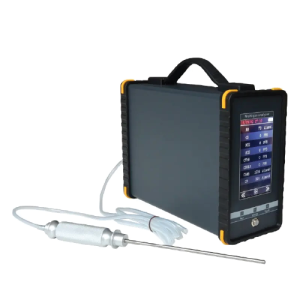
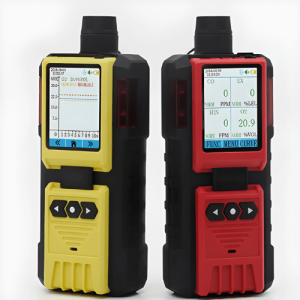
Environmental Multi TestersAgro Enviro Tests 16-in-1 Portable Probe Gas Analyzer – Built in pump suction detection
-
Product successfully added to the Quote List
-
Product successfully added to the Quote List
-
Product successfully added to the Quote List
-
Product successfully added to the Quote List
-
Product successfully added to the Quote List